
The Eurasian "five" unifies market rules and strengthens integration
The Eurasian Economic Union is moving to long-term planning of the quality of life of citizens and working conditions of business. The agenda of the day is the creation of a seamless economic space through unified standards and digital statistics.
On March 13, 2026, the meeting of the Council, which determined the vector of development of the Union until 2030, ended at the headquarters of the Eurasian Economic Commission (EEC). The key result was the approval of the consumer protection program and the introduction of new rules for product labeling. Details of the decisions are published on the official portal EEC.
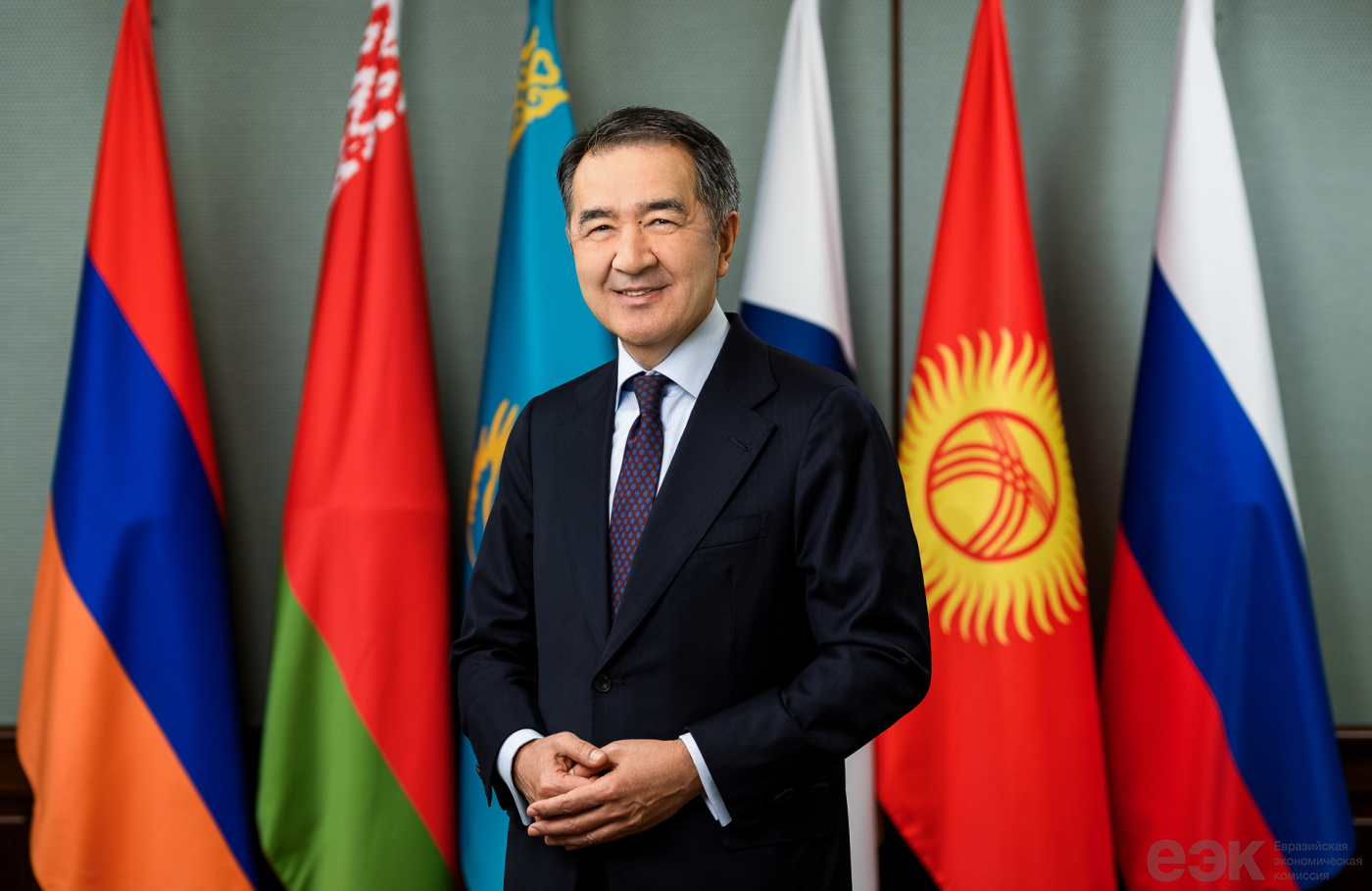
Bakytzhan Sagintaev, Chairman of the Board of EEC, commenting on the results, emphasized:
— The commission helps create favorable conditions for business within the EAEU. The involvement of the business circles of the Eurasian "five" countries in the integration process is becoming a key element of ensuring the competitiveness of national economies, - reports the press service of the EEC.
Vice-Prime Minister of Russia Alexey Overchuk, in turn, noted that "... the adopted decisions, including the consumer protection program, testify to the high priority that the EAEU states attach to the provision of reliable protection of the interests of citizens in the common space."
The development of the EAEU in the last three years is characterized by a transition from the simple elimination of customs barriers to the creation of common industry systems. If in 2024 the main problem of business remained technical barriers, then in 2026 the emphasis shifted to industrial cooperation and unification of the rules of the game. Earlier, according to the EEC, it was the lack of uniform approaches to labeling and statistics that hindered the transparency of cross-border flows.
Analysts of Business Eurasia during 2024-2026 fixed the demand of entrepreneurs for predictability. As Minister of Economy and Commerce of the Kyrgyz Republic Daniyar Amangeldiev noted earlier in the comments for Business Eurasia :
— The business forum under the auspices of the Ministry of Economy and joint products with development funds show that trade and investment is the basis on which we build long-term relations with partner regions.
This idea is developed by other experts of "Business Eurasia". At the same time, representatives of business circles in Russia also see the integration as an insurance against external shocks. In February 2026, the head of the RSPP, Alexander Shokhin, said:
— More than 70% of market participants positively assess the influence of EAEU on their business. In 2026, barriers will be put on the second plan, and project cooperation and financial assistance tools on the first.
The EEC Council also approved the Program for the Development of Integration in the Statistical Sector until 2030. This decision correlates with the forecasts of the Eurasian Development Bank (EBRD). In the analytical report of the bank, it is noted that high investment activity and mutual FDI will become drivers of GDP growth in the region by 4-5% in the next two years.
Decisions of the EEC Council 13 times confirm the transition of the union from formal association to deep structural integration. The unification of technical regulations and marking rules is the foundation on which a protected domestic market for 190 million consumers is built.
Business analytics in the field of Eurasian integration confirms that the focus of the state has shifted to the creation of a trusted environment, where consumer interest and business transparency become the main factors of economic sovereignty.
Text adapted by AI. Should it lack clarity, read the original RU-ver.
Own.info
Business Eurasia