
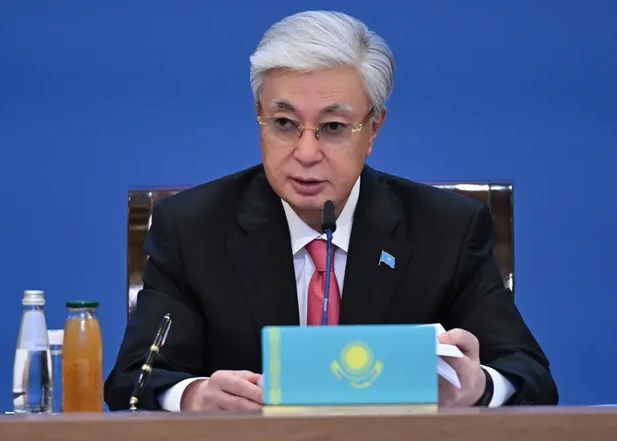
Astana marks the Union's transition to a sovereign technological order
The meeting of the Supreme Eurasian Economic Council (SEEC), timed to coincide with Eurasian Economic Union Day, marked a tectonic shift in the union's integration strategy.
Amid global market volatility and a global economic growth slowdown to 3%, the Eurasian space is demonstrating strong internal resilience. The declared primary development vector is the comprehensive digitalization of physical corridors and the deployment of artificial intelligence (AI) systems, which aims to fundamentally reshape the macroregion's macroeconomic landscape.
Indicator: Institutional Milestone of the Decade
A historic milestone – May 29, Eurasian Economic Union Day – marked the integration association's achievement of stable macroeconomic indicators. Contrary to the disappointing forecasts of international institutions, the EAEU's internal framework is demonstrating dynamism independent of Western stagnation trends. Trade turnover between member states has approached a significant milestone. This was emphasized by Kassym-Joomart Tokayev, Chairman of the Supreme Eurasian Economic Council:
— This year, we expect mutual trade to increase by more than 6%, which will allow us to surpass the $100 billion mark, — the Kazakh leader stated.
The Union's combined GDP growth rate of 2.5% for 2026-2027 is a direct consequence of the synchronization of national strategies. The adoption of a joint statement on the responsible development of AI and the launch of the ALI International Artificial Intelligence Center in Astana institutionalize the EAEU's claim to technological sovereignty.
Distortion: Digital Divide and Logistics Snarls
However, macroeconomic optimism reveals a deep deformation in the Eurasian space: the critical unevenness in the digitalization of national government systems and transportation arteries. While Kazakhstan is cementing its position as a net technology exporter with IT services valued at over $1 billion and deploying over 6,000 smart farms, other EAEU members are facing an infrastructure vacuum. The extensive network of end-to-end corridors, stretching over 50,000 kilometers, risks running into customs and bureaucratic barriers at cross-border points. Kazakhstan's implementation of the Smart Cargo platform, based on the single-window principle, and the exchange of electronic permit forms highlight the urgent need for the immediate integration of the information systems of all EAEU countries. Delays in creating the Eurasian Economic Commission's (EEC) "digital showcase of national services" are creating the risk of localized congestion, which could slow down increased transit flows.
Forecast: Architecture of a Supranational Hub
The long-term sustainability of the EAEU economies directly depends on the speed of creating a fully-fledged ecosystem of digital transport corridors. With global investment in AI technologies exceeding $1 trillion and the robotics market expected to surpass $376 billion by 2035, the Union must be proactive. The Eurasian Development Bank (EDB) will serve as the strategic driver of this technological breakthrough, with its potential reoriented toward large-scale financing of high-tech cooperative projects in industry and the agro-industrial complex. The analytical framework's forecast is clear: in the next two years, the EAEU will complete its transformation from a classic customs union into a single high-tech transport and digital hub for Eurasia. Adaptation to this new order will not only strengthen internal compliance but also dictate terms externally—in negotiations on free trade zones with India, the Arab world, and Southeast Asia.
— Our countries, of course, cannot remain aloof from global trends, — emphasized the Chairman of the Supreme Eurasian Economic Council, the head of Kazakhstan, Kassym-Joomart Tokayev, emphatically defining the uncontested vector of Eurasian development until 2035.
Text adapted by AI. Should it lack clarity, read the original RU-ver.
Own.info
Business Eurasia