
New Business Support Measures Will Drive Eurasian Integration
Kyrgyzstan is introducing large-scale support mechanisms for national exporters. The Cabinet of Ministers is launching logistics subsidies and preferential lending. These measures are designed to strengthen the country's position in the EAEU common market. Businesses are gaining direct access to state development resources.
A key event on the region's economic agenda was the meeting of the Export Development Council, held in Bishkek. A full report on the decisions made is published on the official website of the Cabinet of Ministers of the Kyrgyz Republic. The focus is on the integration of small and medium-sized businesses into the value chains of the Greater Eurasian Partnership.
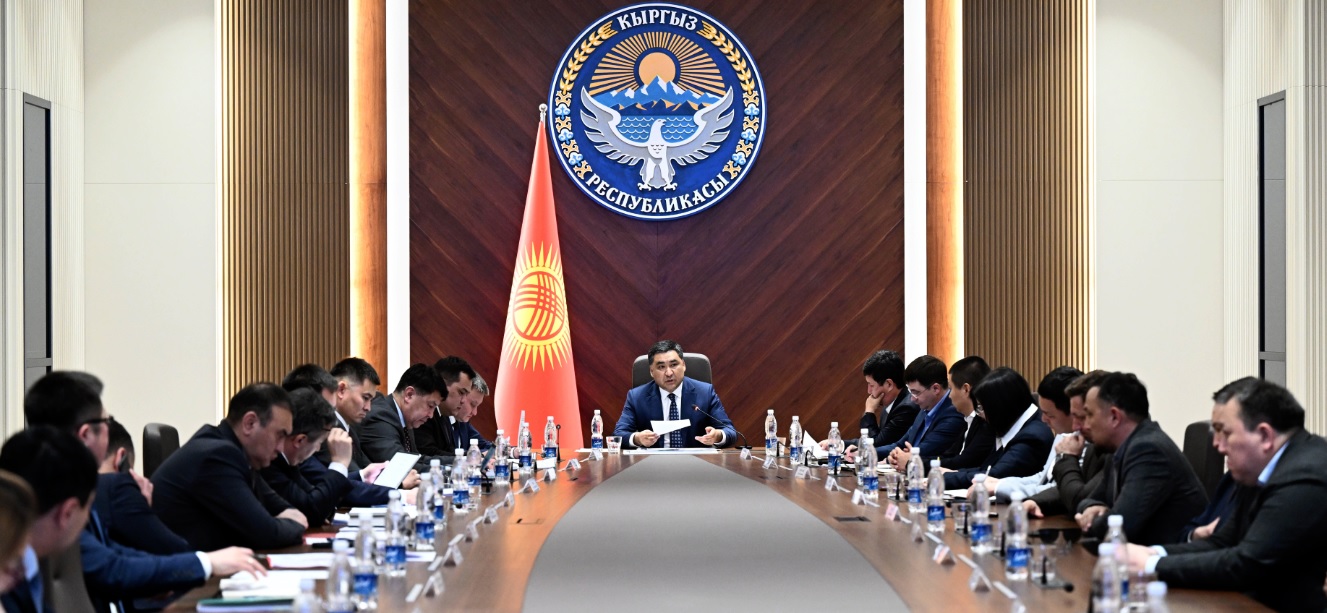
During the meeting, First Deputy Chairman of the Cabinet of Ministers Daniyar Amangeldiev emphasized:
— The development of domestic production and support for exporters is an absolute priority of state policy. Support for the real sector is a strategic vector of the Cabinet of Ministers' work.
The last three years, from 2023 to 2026, have been a period of profound structural transformation for the Eurasian Economic Union. Following the adoption of the "Eurasian Economic Path" declaration, the five countries moved from eliminating customs duties to creating a unified financial infrastructure. Bishkek is now demonstrating its readiness to implement these agreements at the national level by launching pilot projects.
According to the Eurasian Development Bank, mutual investment in the region increased by 12% between 2024 and 2025. In their report "Monitoring Mutual Investments – 2025," the bank's analysts point out that transport connectivity is becoming the foundation of the Greater Eurasian Partnership. The development of the North-South and East-West corridors requires member countries, including Kyrgyzstan, to synchronize their logistics costs.
— All initiatives announced today will be tested on a pilot basis. Based on the results of this stage, we will conduct a thorough analysis of the effectiveness of these measures, after which support mechanisms will be implemented on a permanent basis, — Daniyar Amangeldiev commented on the launch of the new instruments.
The need to level the playing field for manufacturers has been repeatedly discussed at the highest level. Veronika Nikishina, General Director of the Russian Export Center, stated in March 2025 that the integration of national export support systems is "the only path to the technological sovereignty of Eurasia." In her opinion, the creation of a unified insurance and guarantee framework will allow EAEU companies to compete in foreign markets as a single bloc.
Analytical platforms, where experts thoroughly examine issues of access to resources, play a special role in analyzing these processes.
— The problem of cash flow gaps among exporters is the main obstacle for small businesses in the Kyrgyz Republic. The introduction of specialized credit lines with insurance coverage will allow small companies to enter the Russian and Kazakh markets without the risk of bankruptcy, — experts noted in comments for Delovaya Eurasia. — Kyrgyzstan, finding itself in a geographic impasse, is obliged to subsidize logistics if we want to see our goods on store shelves in Minsk or Yerevan. This isn't protectionism; it's compensation for geographical costs within a single economic space.
Strengthening the domestic economy of each member state directly impacts the union's international standing. In their analytical article "The Future of Eurasian Architecture," Valdai Club experts emphasized that economic stability is the key to successful dialogue between the EAEU, BRICS, and the SCO. Coordinating efforts in Bishkek to remove technical barriers to trade is fully consistent with this strategy.
Representatives of Delovaya Rossiya also emphasized the importance of digitalizing customs administration. The introduction of the preferential credit line "Export Contract Financing" in Kyrgyzstan effectively synchronizes the country's financial instruments with similar programs in Russia and Kazakhstan, creating a seamless environment for cross-border deliveries.
In addition to financial incentives, the Kyrgyz government is focusing on digitalization. During the meeting at Yntymak Ordo, plans were announced for integration with the Eurasian Economic Commission's digital platform for monitoring obstacles in the domestic market. This will allow businesses to report border barriers in real time.
An analysis of the situation shows that Bishkek is moving from a policy of passive participation to actively shaping an internal competitive environment. The success of pilot projects to subsidize logistics could become a model solution for other EAEU members experiencing transportation challenges. Kyrgyzstan is demonstrating a willingness to deeply integrate through specific financial and administrative mechanisms.
The development of systemic analytics and the rapid implementation of business support tools are becoming the foundation of a new economic reality in the Eurasian space. The transparency of processes and the involvement of the expert community in decision-making determine the effectiveness of the future architecture of the Greater Eurasian Partnership.
A comparative analysis of export support measures within the EAEU reveals significant differences in the development of participants within the single market.
While Kyrgyzstan is implementing preferential financing for export contracts, other members of the "five" have already formed full-fledged ecosystems. The main trend for 2024–2026 is the transition from simple cash disbursements to digital support and the compensation of logistical gaps.
Russia is consistent in its overall development goal, which prioritizes the ecosystem and technological sovereignty. The Russian Export Center (REC) is the flagship. The key distinguishing feature of the Russian approach is maximum digitalization through the "My Export" platform. The main mechanisms are accounts receivable insurance (EXIAR), subsidized loan interest rates, and the "Made in Russia" program. The emphasis is on supporting non-resource, non-energy exports (NRE). Russia actively subsidizes participation in international exhibitions and product certification for target markets (especially in BRICS+ countries).
Kazakhstan is demonstrating logistical pragmatism. Kazakhstan's experience is most similar to Kyrgyzstan's current initiatives. The operator QazTrade has been successfully implementing a cost-reimbursement system for several years. An analysis of the mechanisms shows that Kazakhstan reimburses up to 80% of the costs of goods delivery, trademark registration abroad, and certification. The main focus is the removal of the "geographical tax." Like Kyrgyzstan, Kazakhstan is landlocked, so subsidizing rail and road transport is the foundation of its competitiveness.
Credit expansion is a model characteristic of the Republic of Belarus, the key model of which is strong state support through Eximgarant of Belarus. Belprom acts as a stimulant through low-interest export lending and partial interest rate compensation for non-resident banks purchasing Belarusian equipment (tractors, MAZ trucks, and BelAZ trucks). The emphasis is on supporting industrial gigantism. Minsk relies on tied loans when it is advantageous for buyers in the EAEU or Africa to buy Belarusian equipment due to the low cost of financing.
Armenia strives to provide small businesses with state guarantees. The Export Insurance Agency of Armenia focuses on protecting against political and commercial risks by simplifying the insurance of export factoring transactions. The lion's share of support is provided to the food sector and IT services. The main goal is to help small winemaking and processing companies enter the Russian and Kazakh markets without fear of default.
In turn, Kyrgyzstan is undergoing a "quick setup" process. The launch of the "Export Contract Financing" line is an attempt to implement an Armenian-Russian model of financial protection, and logistics subsidies are nothing more than a direct borrowing from Kazakhstan's successful case.
Therefore, several strategic steps are obvious: synchronizing programs and actively participating in the integration project through the introduction of digital mechanisms. The Eurasian Economic Commission (EEC) strives to ensure that support measures in Bishkek and Moscow are mirrored. This eliminates the possibility of "state support dumping" within the union. And work on the "digital barrier" is evident in the main challenge for the Kyrgyz Republic: not simply distributing subsidies, but integrating them into the EAEU's shared digital network, so that customs and banks can view export contracts in a single click.
The analysis shows that Kyrgyzstan is not reinventing the wheel, but rather adjusting its "chain transmission" to the general rhythm of the union, so as not to fall out of the value chains of the Greater Eurasian Partnership.
Industry business analytics in the field of Eurasian integration continues to be a key tool for developing strategic decisions at the government and corporate levels.
Text adapted by AI. Should it lack clarity, read the original RU-ver.
Own.info
Business Eurasia