
Infrastructure Shock and the New Realities of Union
The military aggression of the United States and the Zionist regime against Tehran marked a geoeconomic shift. The attack of February 28, 2026, coincided with the process of union integration.
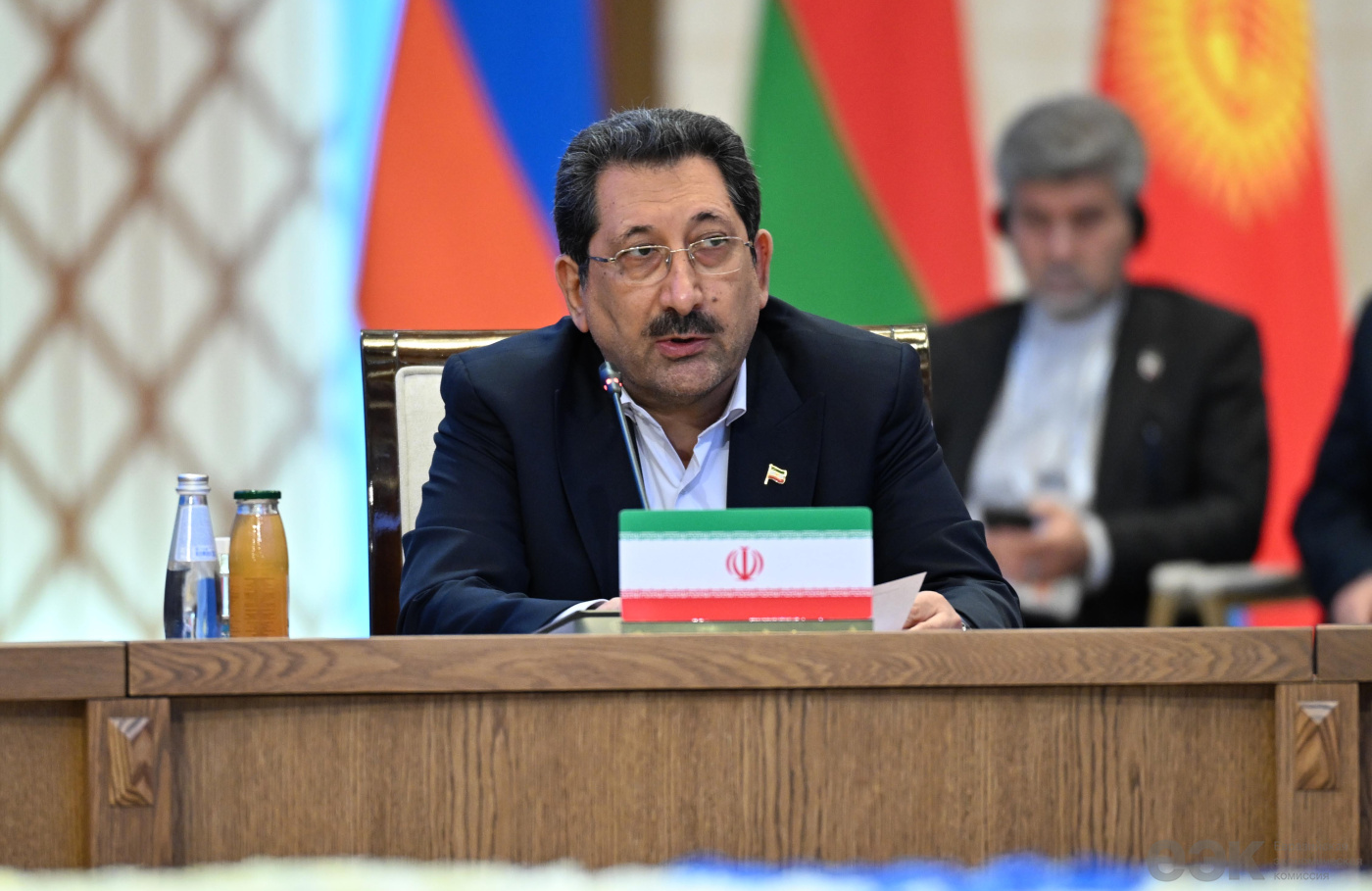
— The recent attacks by the Zionist regime and the United States on the Islamic Republic of Iran, the bombing of urban and civilian infrastructure, healthcare facilities, and the pharmaceutical industry, which includes targeted and deliberate strikes against vital transportation and energy facilities, including the large-scale destruction of industrial infrastructure, are not only a war crime against the Iranian people. They have also disrupted production and export processes, making corridors and supply routes for goods throughout the region unsafe, — Iranian Minister of Industry, Mines, and Trade Seyed Mohammad Attabak stated at a meeting of the Supreme Eurasian Economic Council on May 29, 2026, in Astana.
Civilian casualties amounted to 168 people. The disruption of logistics directly undermines the EAEU's trade potential. Under these circumstances, the Islamic Republic of Iran is intensifying regional multilateral agreements.
Behind the façade of military escalation lies an attempt to destroy the macro-region's transit potential. Strikes against the Iranian transport network are paralyzing the economic union's southern routes. This is a direct torpedo to the free trade agreement with the EAEU. A year into the agreement, trade turnover has grown rapidly. Now, the stability of Eurasian supplies is under direct threat. Opponents of integration are targeting key points of convergence between Eurasian economies. Iran is forced to combine defense with the search for new markets. Tehran seeks to minimize the impact of the damage by deepening cooperation.
The disruption of logistics routes is affecting manufacturers in all countries of the Eurasian five. Industry is losing stable distribution channels and raw material procurement. Trading companies are reporting a sharp increase in cargo insurance costs. Businesses are facing the impossibility of fulfilling long-term contracts.
— These corridors serve as vital arteries for the region and play a key role in facilitating trade and industrial development, ensuring economic development and growth, and, consequently, creating jobs, increasing incomes, reducing poverty, and reducing social inequality in countries, — noted Minister Seyed Muhammad Attabak.
Such a distortion of macrostructures leads to increased social tension. Regional businesses demand guarantees of the security of physical supplies.
The global regulatory system is completely blind to acts of economic warfare. International structures completely ignore the destruction of the civilian infrastructure of their Eurasian partner. The lack of a clear response from the UN Security Council is giving rise to legal nihilism. The EAEU is faced with the need to create its own protective mechanisms.
— It is particularly regrettable that throughout this entire period, international organizations and mechanisms, such as the United Nations and the Security Council, have failed to take any effective steps or measures to condemn the aggression of the United States and the Zionist regime, — the Iranian representative emphasized.
This is forcing allies to urgently form independent institutions. The lack of autonomous clearing systems makes integration vulnerable to external sanctions. The creation of common financial platforms is becoming a matter of the bloc's survival.
The solution lies in the accelerated creation of a sovereign settlement infrastructure. Tehran is proposing that EAEU countries launch independent financial settlement mechanisms. The use of national currencies will allow them to circumvent Western blockades. The Joint Committee for the Implementation of the Agreement is already conducting substantive work.
— The Islamic Republic of Iran believes that the EAEU needs to establish financial settlements independent of external forces in order to protect the organization from unfair and illegitimate sanctions imposed by third countries, which are already directed against some members of the Union, — Seyed Mohammad Attabak concluded.
The political will to reform the settlement architecture is present among all participants.
Macroregional integration is acquiring a new defense dimension. Union countries are forced to accelerate economic rapprochement despite external pressure. Trust and pragmatism are shaping the contours of a new Eurasian security architecture.
Text adapted by AI. Should it lack clarity, read the original RU-ver.
Own.info
Business Eurasia