
Issyk-Kul Forum Records Shift in Global Investment Centers
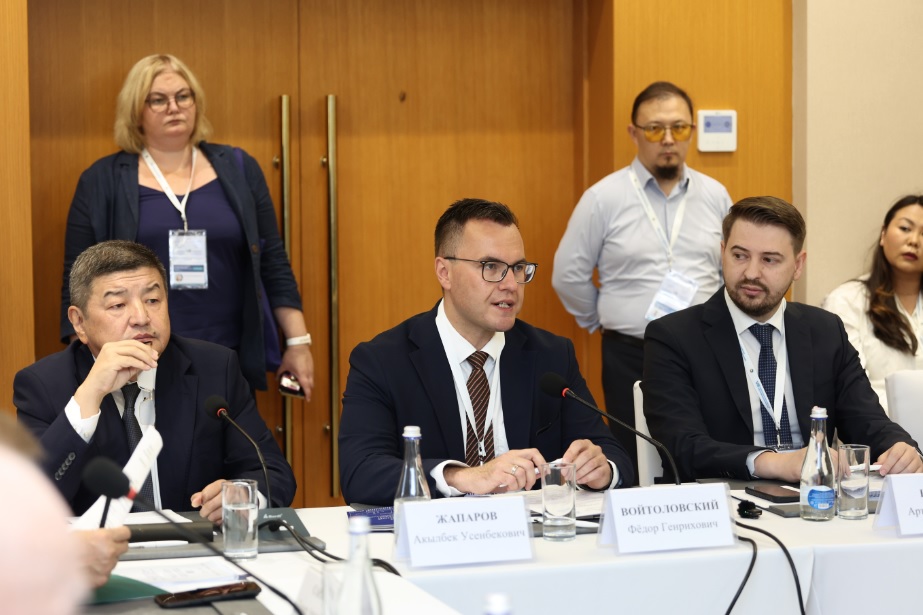
Redistribution of Investment Flows in Eurasia. The 8th Kyrgyz-Russian Economic Forum was held in Issyk-Kul on August 5, 2026. The forum included a visiting session of the Primakov Readings international expert forum. Participants discussed the economic development of Central Asia amid instability.
According to the latest data, global GDP growth rates for 2025 ranged from 3.7% to 4%. Kyrgyzstan, meanwhile, demonstrated an impressive GDP growth rate of over 11%.
— Over the past decade, Central Asia has established itself as an independent hub of Eurasian relations, — said session moderator Fyodor Voitalovsky, Director of the IMEMO RAS. — The region is simultaneously experiencing the pressure of instability and drawing new opportunities from it.
Analysts predict that Kyrgyzstan's positive momentum will continue into 2026. Russia, China, and countries in the region are deepening industrial cooperation.
Transformation of Global Value Chains
According to the report, the structure of the global economy is rapidly changing. Former Western centers of foreign direct investment are losing ground to new players. China, India, Brazil, and South Africa are forming alternative trade and technology hubs.
— There are countries that are accustomed to forming and managing international institutions, — noted Fyodor Voitalovsky. — But now there are more centers, with China, India, Russia, and Brazil developing.
Consequently, the restructuring of global markets is intensifying competition for influence in Eurasia. The development of national economies is directly dependent on international military and political factors. In turn, external pressure is being transformed into a resource for domestic growth.
Risks of distortion of logistics and trade routes
Meanwhile, the US-Israeli operation against Iran has triggered higher energy prices. Experts are noting the risk of closure of transport corridors in the Strait of Hormuz. A reduction in supplies from the Middle East threatens global fertilizer markets.
— The decline in global GDP growth in 2026 is estimated at between 0.2 and 0.7 percentage points, — the IMEMO director emphasized. — This is significant; a major redistribution of global energy markets is underway.
In addition to rising food prices, businesses are facing the impact of trade wars. Meanwhile, new sanctions and tariffs are disrupting traditional production chains.
Institutional Vacuum and Regulatory Conflicts
As this process continues, old institutions are losing their leverage over global governance. Conflicts between the US and China preclude the creation of unified rules.
— I think we face a very challenging period in the next 10 years, — the moderator noted. — The structure of a new world order, new rules, and new understandings of regulation are taking shape.
Consequently, the regulatory vacuum is pushing countries to build autonomous trade unions. Western states are attempting to establish new demarcation lines in Eurasia.
Connecting systems as the main vector of adaptation
As the final materials show, Central Asia relies on its own demographic and natural resources. Countries in the region are choosing a strategy of inclusive economic interaction.
— We are seeing sustainable positive economic growth in Kyrgyzstan; this is stimulating Kyrgyzstan to more actively engage with Russia and participate in Eurasian integration, — concluded Fyodor Voitalovsky.
According to the planned path, connecting economic systems will ensure the stability of the union until 2030. Practical cooperation will neutralize the negative impact of external factors.
Text adapted by AI. Should it lack clarity, read the original RU-ver.
Own.info
Business Eurasia