
Officials' Mistakes Are Depriving the Republic of Billions in SPIEF 2026 Contracts
Ignoring Scale
The St. Petersburg International Economic Forum opened in St. Petersburg on June 4, 2026. Russian economic forums are unrivaled in terms of success, power, and strength. As Business Eurasia previously reported, SPIEF 2026 highlights the barriers of the EAEU and the passivity of government executive bodies. Kyrgyzstan sent an official delegation to St. Petersburg, headed by First Deputy Chairman of the Cabinet of Ministers Daniyar Amangeldiev. However, key officials of the Chamber of Commerce and Industry and leaders of major domestic businesses remained in Bishkek. Ministry officials again failed to develop priority areas for Kyrgyz businesses through the mechanisms of the Eurasian Economic Commission. The balance between government representation and the real sector of the economy at the main Eurasian forum has been disrupted.
The Illusion of a Transit Hub
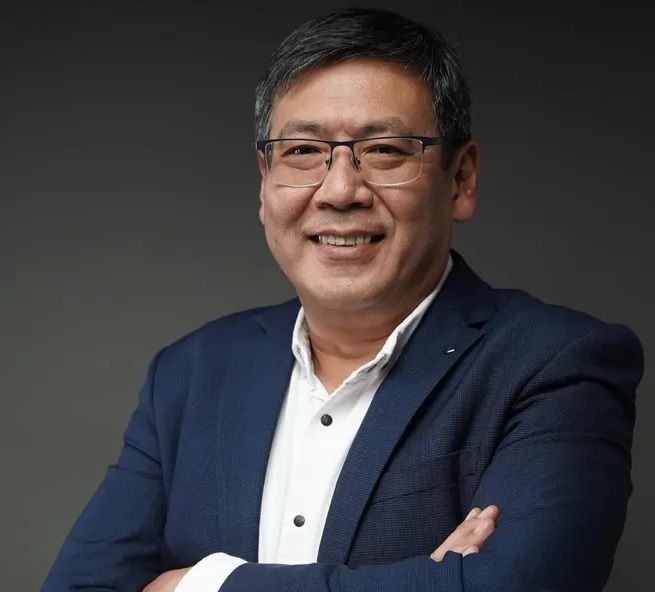
— In the current geopolitical conditions, there are opportunities for re-exporting goods, perhaps even those slightly subject to sanctions, and Kyrgyzstan is becoming a hub in this regard, — notes Melis Satarov, economist and director of the Kyrgyz National Alliance of Business Associations (NABA).
This Porto Franco pattern is temporary. Turnover is growing through intermediary arrangements, not through industrial development. Bishkek became the first territory to receive secondary Western sanctions without direct involvement in conflicts. The republic is creating lenient tax regimes for trade outside its territory. But these preferences serve foreign trade flows without creating a long-term technological base within the country. The country risks remaining a mere transit hub without major investment projects of its own.
Blows to the National Sector
— The St. Petersburg International Economic Forum addresses not only economic issues, but also primarily political ones, — notes Melis Sattarov, Director of the National Association of Business Associations (NABA).
Due to the absence of businesspeople at the SPIEF 2026 sessions, the country is losing direct contracts. Border disputes on the Kyrgyz-Kazakh and Kazakh-Russian borders remain without systemic solutions. While Goar Barseghyan, Member of the Board (Minister) for Industry and Agro-Industrial Complex of the Eurasian Economic Commission (EEC), regularly brings the issue of high-tech ecosystems into the public domain, actual suppliers are queuing at checkpoints. Tax residents of Kyrgyzstan are denied access to the large-scale investment programs of the Russian Direct Investment Fund. Logistics companies, garment factories, and agricultural producers are suffering financial losses.
The Blindness of Integration Institutions
— The [Kyrgyzstan–Russia] session on the sidelines of the Forum has been functioning excellently for five years, but there is still room for improvement, — the economist states.
The relevant Ministry, the Ministry of Economy, fails to coordinate the business agenda with the decisions of the Eurasian Economic Commission. Over the past five years, the special country session has become a platform for routine reports from officials. Mechanisms for protecting mutual investments within the EAEU are not working at the level of small and medium-sized businesses. The regulator sees no shortage of real project applications from domestic companies. International arbitration and the EEC expert councils ignore the daily barriers in the union’s internal markets.
Breaking the Deadlock
The formation of a new world order requires a change in approaches to economic diplomacy. At the SPIEF 2026 sessions, Deputy Prime Minister of the Russian Federation Alexey Overchuk and Deputy Secretary-General of the SCO Akhmad Saidmurodzoda outlined the contours of new transport corridors. Kyrgyzstan urgently needs to transition from passive transit to the creation of high-value-added products. The government should form delegations to external markets solely based on the needs of the real sector. The introduction of breakthrough technologies in the agricultural sector and rigorous protection of national interests within the Eurasian Economic Commission will lift the country out of the category of small markets. Developing long-term partnerships with the Eurasian Development Bank will ensure economic sustainability.
Text adapted by AI. Should it lack clarity, read the original RU-ver.
Own.info
Business Eurasia