
The potential reclamation of Gazprom’s assets could alter the investment climate in Kyrgyzstan
Sadyr Japarov’s statement regarding the possible return of gas infrastructure to state control introduces a new issue into Russian-Kyrgyz relations. At stake is not merely the gasification of specific districts, but the fulfillment of intergovernmental agreements. The situation takes on added significance given the approach of the presidential election on January 27, 2027. Consequently, what began as a localized issue could potentially impact energy cooperation across the entire Eurasian Economic Union (EAEU).
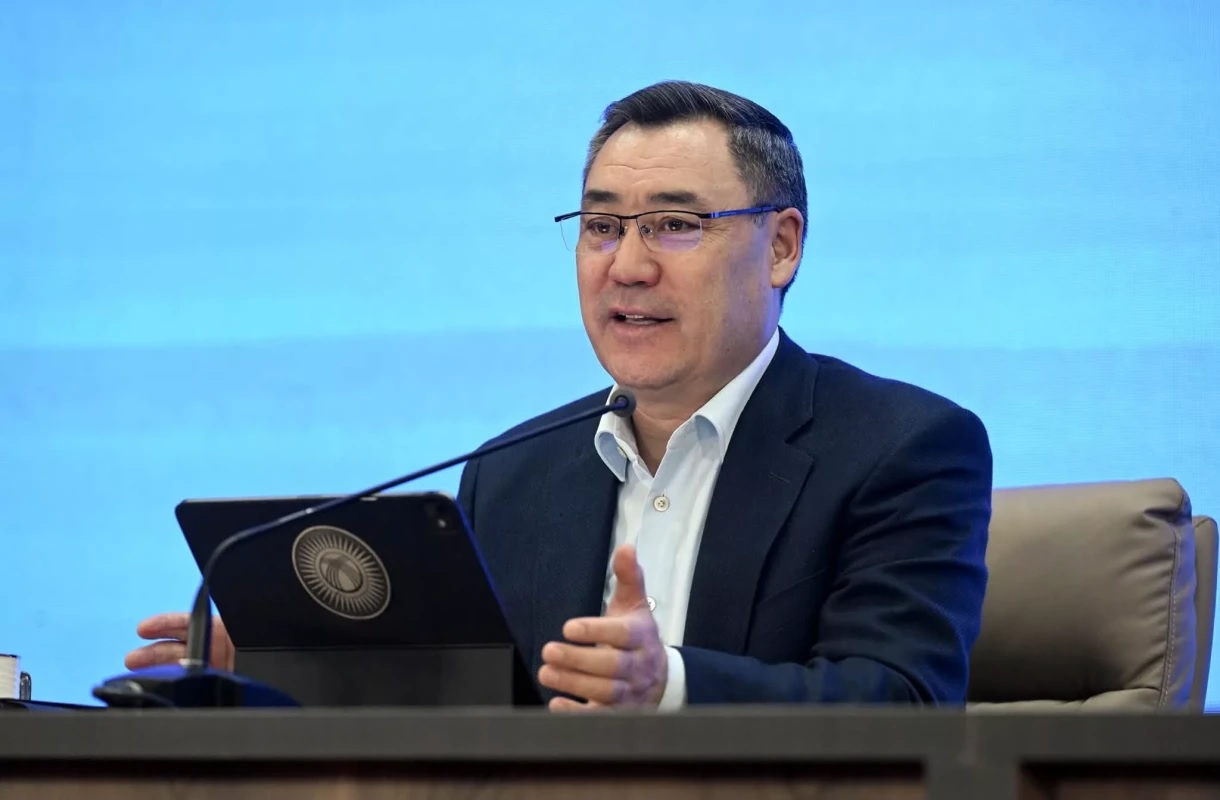
On November 3, 2026, the President of Kyrgyzstan addressed residents of the Aitmatov and Manas districts in the Talas Region. The discussion was prompted by concerns regarding the gasification of the border-adjacent Manas district. Sadyr Japarov declared that he is prepared to return the gas system to state control if Gazprom fails to meet its obligations to provide gas infrastructure throughout the country. The head of state also pointed to the precedent set by the return of the Kumtor gold mine to Kyrgyz management.
"The agreement contains provisions requiring Gazprom to allocate funds for the gasification of the entire country. Yet, these provisions remain unfulfilled. I have been raising this issue for two or three years, telling Gazprom: 'If you don't get it done, I will take it back—just as I did with Kumtor—and handle it myself,'" stated Sadyr Japarov.
However, the legal framework governing cooperation in the gas sector differs significantly from the circumstances surrounding the gold-mining enterprise.
What the Agreement with Russia Entails
An intergovernmental Agreement on cooperation in the gas sector was signed on July 26, 2013. The document entered into force on February 17, 2014, and is set for a 25-year term. Article 2 stipulates the transfer of a 100% stake in the gas company to the Russian side for the sum of one US dollar. Thus, the transaction was not a standard sale of an enterprise, but rather a comprehensive interstate agreement.
Article 5 establishes an obligation for the Russian investor to invest at least 20 billion rubles in the modernization of gas infrastructure. The deadline for fulfilling this obligation was set at five years from the date of the transfer of ownership. The same article outlines commitments regarding the development of equipment, the uninterrupted supply of gas, the expansion of the domestic market, and compliance with environmental requirements.
In turn, Article 7 guarantees the protection of the Russian investor’s rights for a period of 25 years. Any changes to these rights are permitted only upon the mutual consent of the parties.
Article 6 provides for the possibility of nationalization in the public interest, subject to established procedures. However, such a decision entails compensation equal to the full market value of the property and allows for arbitration proceedings.
Article 11 defines the procedure for the return of gas infrastructure to Kyrgyzstan upon the termination of the agreement, stipulating that the Russian side shall be compensated for the market value of the assets.
It is important to note that the agreement does not set specific deadlines for the complete gasification of the republic, nor does it contain an obligation to connect every single locality by a certain year.
Economic outcomes of the Russian presence
Throughout the period of cooperation, Kyrgyzstan’s gas sector has received large-scale investment. According to published data, Gazprom Kyrgyzstan has invested approximately 34 billion soms in infrastructure development. The company also settled the debts of Kyrgyzgaz, which had reached 65 million dollars. Approximately 1,500 kilometers of gas distribution networks have been constructed, and 54 localities and residential areas have been connected to the gas supply.
The number of subscribers has reached approximately 450,000, and the gasification rate has risen from 22% to 44–45%.
These figures reflect a significant transformation in the state of the gas sector. At the same time, a substantial portion of the republic’s territory remains outside the reach of the gas infrastructure. Consequently, the issue of further expanding gasification remains economically relevant. However, addressing it requires the coordination of investment programs, funding sources, and technical capabilities.
Kumtor and Gas Infrastructure: Distinct Legal Circumstances
Comparing the two enterprises requires taking into account the history of their respective relationships with the state. In the case of Kumtor, the conflict involved environmental grievances, legal proceedings, and a dispute over the financial obligations of Centerra Gold.
In 2021, Kyrgyzstan imposed external management on the enterprise. In 2022, the parties reached a settlement agreement.
As a result, Kyrgyzstan acquired 100% of the shares in the two companies that owned and operated Kumtor. The parties dropped their mutual claims, and responsibility for future environmental obligations shifted to the Kyrgyz side.
The situation involving Gazprom Kyrgyzstan rests on a different legal foundation. The Russian side acquired the asset within the framework of an intergovernmental agreement that includes provisions for investments and long-term guarantees. Consequently, applying the "Kumtor model"—a reference to the approach taken with the Kumtor gold mine—to the gas sector without a distinct legal justification would lead to entirely different consequences.
The Cost of a Potential Takeover
Nationalizing the gas infrastructure would necessitate addressing several economic challenges. The first is compensating the Russian investor; Article 6 of the agreement stipulates that assets must be valued at their full market price. Furthermore, the possibility of international arbitration must be taken into account. A second issue concerns the financing of future modernization: should the Russian investor’s involvement cease, Kyrgyzstan would have to independently fund the construction of networks, the repair of equipment, and the development of infrastructure. A third challenge is ensuring an uninterrupted gas supply. The Russian side currently maintains established mechanisms for the procurement, transportation, and distribution of fuel; a change in ownership would require either preserving these existing mechanisms or negotiating new agreements. A fourth factor is tariff policy: the state would need to strike a balance between keeping gas affordable for the population, covering investment costs, and ensuring the financial sustainability of the operator.
For the national budget, nationalization entails more than just gaining control over an asset; it could also create additional liabilities related to compensation, infrastructure maintenance, and the need to attract new capital.
The Eurasian Dimension
The gas issue extends beyond the bilateral relationship between Moscow and Bishkek. Both Russia and Kyrgyzstan are members of the Eurasian Economic Union (EAEU), where the development of energy cooperation serves as a key pillar of integration. On December 26, 2024, the Supreme Eurasian Economic Council adopted Decision No. 22, which outlines the formation of a common gas market within the Union. The document mandates the development of a roadmap for this common market, extending through 2030. For Kyrgyzstan, participation in this process offers an opportunity to develop its energy infrastructure through interstate cooperation. A unilateral termination of existing investment agreements could lead to a higher assessment of legal risks for Russian investors. This could affect not only the gas sector but also future projects involving industrial, infrastructural, and energy cooperation.
Alternatively, if the parties reach a mutual agreement, a different scenario is possible: updating the investment program, identifying priority areas for gasification, and agreeing upon measurable implementation targets.
The Political Context and the 2027 Horizon
The president’s statement was made less than three months before the upcoming presidential election. In this light, the gasification of remote regions takes on added domestic political significance. For the public, it is a concrete issue of quality of life, while for the authorities, it serves as an opportunity to demonstrate their capacity to address infrastructure challenges. The reference to Kumtor also carries a political dimension, serving as a reminder that the state retains the ability to reclaim control over strategic assets.
However, the public display of such a mechanism in dealings with a Russian investor raises a broader question: how reliable are the guarantees provided to foreign capital in Kyrgyzstan? For the Russian-Kyrgyz partnership, what matters is not merely the preservation of a specific company’s assets, but the overall predictability of intergovernmental agreements.
The Next Step: Aligning Interests
The current situation could unfold in several ways. The preferred path—consistent with the broader objectives of the Eurasian partnership—would be to continue the existing model while refining investment programs and establishing specific, measurable gasification targets. At the bilateral level, the terms of cooperation could be adjusted through mutual agreement, with the involvement of both governments. A unilateral revision of existing agreements would be the least favorable outcome; such a scenario could lead to compensation claims, arbitration, and a complete overhaul of investment plans.
For Kyrgyzstan, maintaining access to Russian energy resources is of fundamental importance. For Russia, the issue concerns the protection of investments and the stability of long-term agreements. For the EAEU, the situation serves as a telling example of how national infrastructure decisions are linked to the broader conditions of economic integration.
Ultimately, the core question is not merely who will manage Kyrgyzstan’s gas system. More importantly, it is how the parties will ensure the continued development of the sector while maintaining economic efficiency and the legal stability of Russian-Kyrgyz cooperation.
Text adapted by AI. Should it lack clarity, read the original RU-ver.
Own.info
Business Eurasia