
Eurasian security is being strengthened by the Kyrgyz military-industrial complex
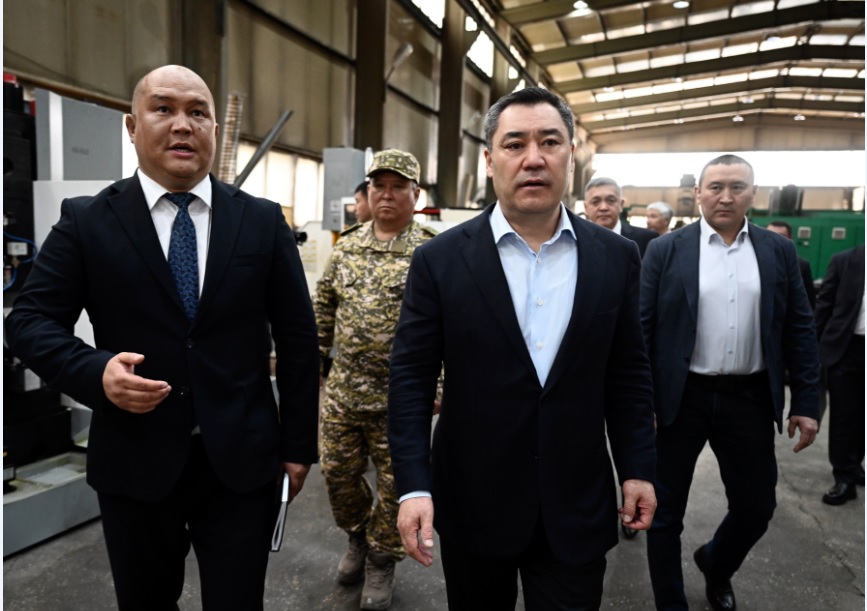
Kyrgyz President Sadyr Japarov has instructed that the issue of organizing the production of domestically produced unmanned aerial vehicles be addressed. The head of state made his announcement to relevant government agencies and the management of JSC Transnational Corporation Dastan on April 3, 2026, during a visit to the plant.
— This objective is aimed at strengthening the country's defense industrial potential, developing high-tech industries, and reducing dependence on imported products, — explained the Kyrgyz president's press service. — One of the plant's key areas is the production of torpedoes. During the visit, special attention was paid to the further development and modernization of the plant. The president emphasized the need to actively implement modern technologies and improve the competitiveness of domestic products.
In a commentary to Business Eurasia, military expert Erkin Osmonov, Commander of the Kyrgyz Air Force (1999-2015), noted that developing the production of the most modern weapons and military equipment is a completely feasible goal. Moreover, the expert sees an opportunity for industrial cooperation in the production of military products.
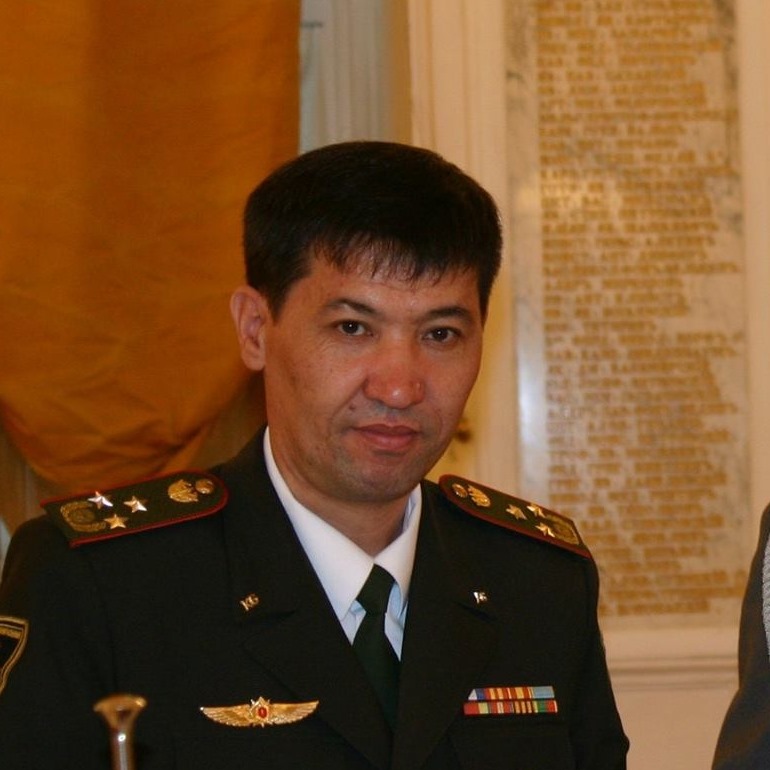
— Kyrgyzstan's military industry is significantly different from neighboring Uzbekistan or Kazakhstan, and we have a smaller population. I believe everything can be achieved if we collaborate with our Russian friends. These could include production lines for ammunition, assault rifles, other small arms, and more, and then we will have a full-fledged and extensive military production, — Erkin Osmonov believes.
The expert believes that the potential, combat training, and skill of the Kyrgyz armed forces have significantly increased.
— This has been especially noticeable over the past five years. — This includes operational combat training, reinforcement with S-300 battalions through the CSTO, the purchase of Tor air defense missile systems from Russia, and the acquisition of the Pechora system from Belarusian partners, as well as communications equipment and radar countermeasures. Our combat crews have been trained to operate these types of weapons, and tactical exercises with live-fire exercises are conducted annually.
According to the source, the Kyrgyz army began to rapidly develop and accumulate unique combat experience in the late 1990s, encountering and repelling terrorist attacks on its southern borders. Moreover, many casualties could have been avoided if the military had possessed at least some modern weaponry.
The Dastan Defense Plant (the Instrument-Making Plant named after the 50th Anniversary of the Kyrgyz SSR – editor's note) was founded in 1956 as part of a program to create a powerful military-industrial cluster in Central Asia. The enterprise has become a unique center for the production of high-tech naval weapons, specifically components for high-speed underwater missiles and torpedoes. A special distinction for the company is that it is the only enterprise in the region producing high-tech naval weapons in a landlocked country.
In the 1970s and 1980s, the enterprise produced up to 400 torpedoes per year. Its flagship was the VA-111 Shkval high-speed underwater missile, along with its components and test facilities. This weapon is still considered one of the fastest underwater weapons in the world, reaching speeds of over 300 km/h. A test facility in the city of Karakol was created specifically for the needs of the plant on Lake Issyk-Kul, where weapon prototypes were tested in a closed deep-sea test range.
In January 2024, a controlling stake in TNK Dastan was officially transferred to the Kyrgyz Ministry of Defense, signaling the final abandonment of the idea of "privatization for the sake of debt" in favor of strengthening the country's military-industrial complex.
Amid global instability and the need for import substitution, Dastan is getting a second wind. The plant's main opportunity lies in its inclusion in the Register of Defense Industry Enterprises of the EAEU countries. This will allow it to receive direct orders from the Russian Ministry of Defense without the complex intermediary arrangements associated with domestic manufacturers. Collaboration with Russian universities (Tomsk and Baltic Technical Universities) is planned to modernize the torpedo electronics and guidance systems. The plant could become a base for the maintenance and repair of both sea-based and land-based military equipment for the needs of the CSTO forces in Central Asia.
By 2026, Dastan will be a strategic asset. However, its future directly depends on how deeply the plant can integrate into the unified defense industrial policy of the EAEU.
Text adapted by AI. Should it lack clarity, read the original RU-ver.
Own.info
Business Eurasia