
The lack of a public opinion institution in the state lobbying system risks leaving businesses at the end of the "Eurasian" path
Kyrgyzstan will be able to realize important economic opportunities in the EAEU only by utilizing the full range of Eurasian integration mechanisms. The national lobbying system requires a public diplomacy institution.
On March 30, 2026, the Ministry of Economy and Commerce discussed the latest EAEU regulation – the technical regulations of the Customs Union and the Eurasian Economic Union, and the implementation of reference standards by responsible bodies. The Ministry's press service informed the editorial staff of Delovaya Eurasia of this. Officials were advised to strengthen their efforts to implement reference standards and resolve problematic issues, and to align national legislation with CU/EAEU regulations.
This announcement itself is not news for foreign economic activity participants from Kyrgyzstan. The republic's authorities and businesses are consistently implementing the requirements prescribed by EAEU regulations, achieving a compliance rate of 90% or higher. Ministries regularly report on their progress. These reports are sent to the supranational body, the Eurasian Economic Commission.
The response to Kyrgyz activity in the outer orbit is another matter. Thus, towards the end of March 2026, Kyrgyz carriers once again encountered congestion at the Ak-Tilek-Avtodorozhny and Ken-Bulun checkpoints on the state border with Kazakhstan. The agricultural export season to EAEU markets has begun, and queues of refrigerated trucks are already stretching for kilometers.
— While we used to receive complaints about defects in cargo, trucks, or documents, there's no point in talking about them now—all the equipment and documentation are in order, — the head of a well-known Kyrgyz transport company explained to Delovaya Eurasia. — Our truckers have already redone everything and brought everything into compliance so much that they're working as cleanly as they could. And the products are properly certified and meet all requirements. The new problem is the downtime mechanisms, which are not regulated by EAEU regulations. Several services are combined at the checkpoint—customs, tax, and border control. They inspect everything. Moreover, not simultaneously, but one at a time. A terminal is being set up at the checkpoint, where a batch of 20 vehicles is driven. And until all 20 have passed inspection and left this 'pocket,' the barrier for entry of the new batch is not opened. The examination of the documents themselves no longer raises any questions from the Kazakh side. Instead, a leisurely pace of work takes place – documents are reviewed and processed by just one official.
The situation on the Kyrgyz-Kazakh border has long ceased to be a matter of simply "tightening controls." It is a systemic crisis that, under the guise of combating smuggling, is systematically destroying the economic foundation of one of the EAEU member states. The artificial "viscosity" of logistics that is being created is becoming a fatal diagnosis for an entire industry that accounts for 90% of the Kyrgyz Republic's transport potential.
Without a developed rail network and a challenging mountainous terrain, road transport accounts for 80 to 90% of all freight transport in the country. The "hidden customs control" described above strikes at the weakest point of the national economy. Trucks sit idle for weeks, and each day of downtime results in up to $400 in monthly losses, driving small and medium-sized businesses to bankruptcy. Due to a lack of working capital, carriers are not upgrading their equipment. The workforce is suffering – long-haul drivers are leaving their companies or parking their vehicles. As a result, the industry, which is crucial for building the transport framework and a seamless logistics space in Eurasia, is turning into a graveyard for old trucks.
The "washing out" of Kyrgyz operators from the market frees up space for large Kazakh or international logistics companies with greater financial strength. By blocking free transit, Astana is putting an end to Bishkek's export ambitions, which are critically important for a republic with only one viable sector, agricultural and processed products. Meanwhile, the rising figures in the statistics committee's reports on transit shipments and exports are not encouraging. Even when goods reach key markets in Russia and Europe, they are far from in a competitive condition. As a result, not only carriers but also thousands of farms suffer.
The situation is paradoxical: an EAEU partner country is legally erecting barriers, which is perceived as an attempt to monopolize all flows within the region. This deprives Kyrgyzstan of the opportunity to pursue an independent economic policy in the long-term development of the Eurasian partnership.
The partners' actions require a deeper analysis from the perspective of Eurasian integration. For example, Article 25 of the Treaty "On the EAEU" guarantees the free movement of goods. A single economic space is not only the absence of customs duties; it is, above all, trust. Creating artificial barriers under the pretext of "technical control" is a misuse of the union's tools for the purposes of unfair competition. As a result, instead of synergy, we see an attempt to "squeeze" a neighbor out of the market, and the very purpose of the Eurasian project is negated.
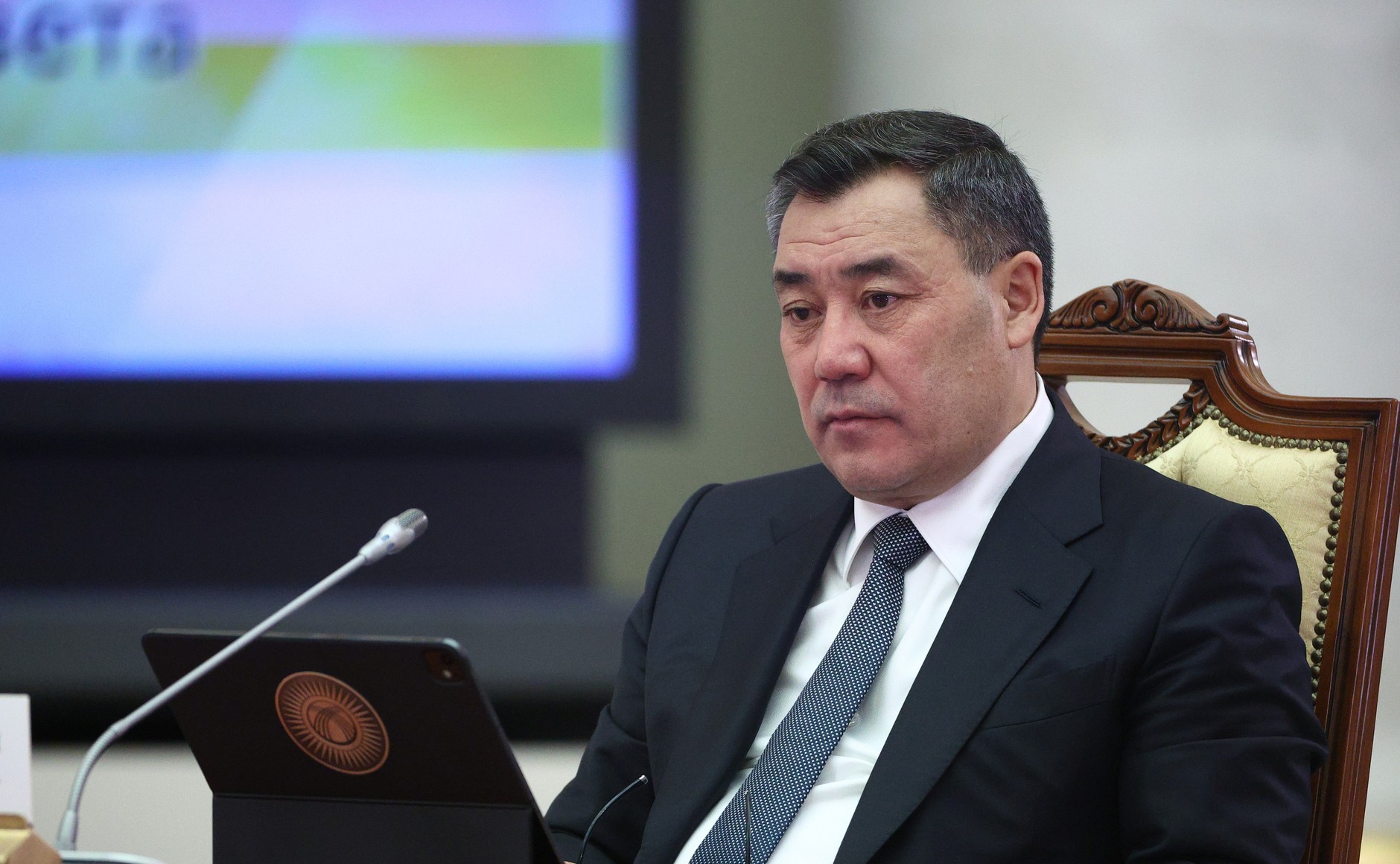
— We must clearly understand that the elimination of barriers, exemptions, and restrictions in the domestic market is the key dividend of any integration, —Kyrgyz President Sadyr Japarov stated back in 2021 at a meeting of the Supreme Eurasian Economic Council.
The head of state emphasized that maximum efforts must be made to increase volumes and ensure sustainable trade flows within the Union's internal market, which is impossible without completely eliminating trade barriers.
Kazakhstan's strategic miscalculation is that the collapse of Kyrgyzstan's transport industry will not bring long-term benefits to Astana. Instead of a stable, prosperous partner, Kazakhstan will receive a zone of economic depression and social instability on its borders.
Kyrgyz carriers cannot even reorient themselves to China or Uzbekistan. China does not allow transit, and Uzbekistan, while it does, leads to destinations that do not meet the requirements for efficient transit or are not the most suitable for Kyrgyz exports.
The situation is close to a stalemate – established norms and rules aren't just failing, they're actually working in reverse.
Meanwhile, the editorial staff's interlocutor notes the significant role and contribution of domestic government agencies and Kyrgyz representatives in the EAEU's supranational structures.
— Since 2017, when the first serious difficulties with transportation and transit arose, our entire system has undergone profound changes. Carriers and manufacturers themselves have become more professional and responsible. Officials have begun interacting more frequently with Kazakh partners and their structures. Our representative in the Eurasian Economic Commission, a former deputy minister of economy, is literally on high alert to consider any effective mechanism for removing barriers. But the problem is that the situation is unresolvable – the Kyrgyz side acts in accordance with the rules, while the Kazakh side acts at its own discretion, —the businessman states.
Business Eurasia's research reveals that classic methods of closed intergovernmental dialogue have exhausted their usefulness. The solution lies elsewhere, requiring a shift to public diplomacy tools—utilizing public opinion and expert participation to adjust policy.
The main problem facing the Kyrgyz authorities is the closed nature of their discussions. Official Bishkek often limits itself to "expressing concerns" or filing complaints with the Eurasian Economic Commission, which is limited in its rights and instruments.
Public diplomacy, on the other hand, involves moving issues out of the classroom and into the realm of broad public debate. Currently, the potential of Kyrgyzstan's civil society and expert community is extremely underutilized. The authorities are failing to form a "united front" with businesses and experts that could convey a consolidated position not only to the government of Kazakhstan, but also to the populations of all EAEU countries. The information space is dominated by government-sanctioned discourse, reflecting Kyrgyzstan's level of quality compliance with legal norms and international agreement requirements. Public debate lacks high-quality analysis involving senior officials from relevant agencies and experts from the academic and business communities. The president is the voice of demands and the driving force behind initiatives, which is generally consistent with the Constitution of Kyrgyzstan. Meanwhile, the presence of the head of state's position in the broader information space and expert discussion will significantly enhance the country's positioning within the Eurasian integration vector.
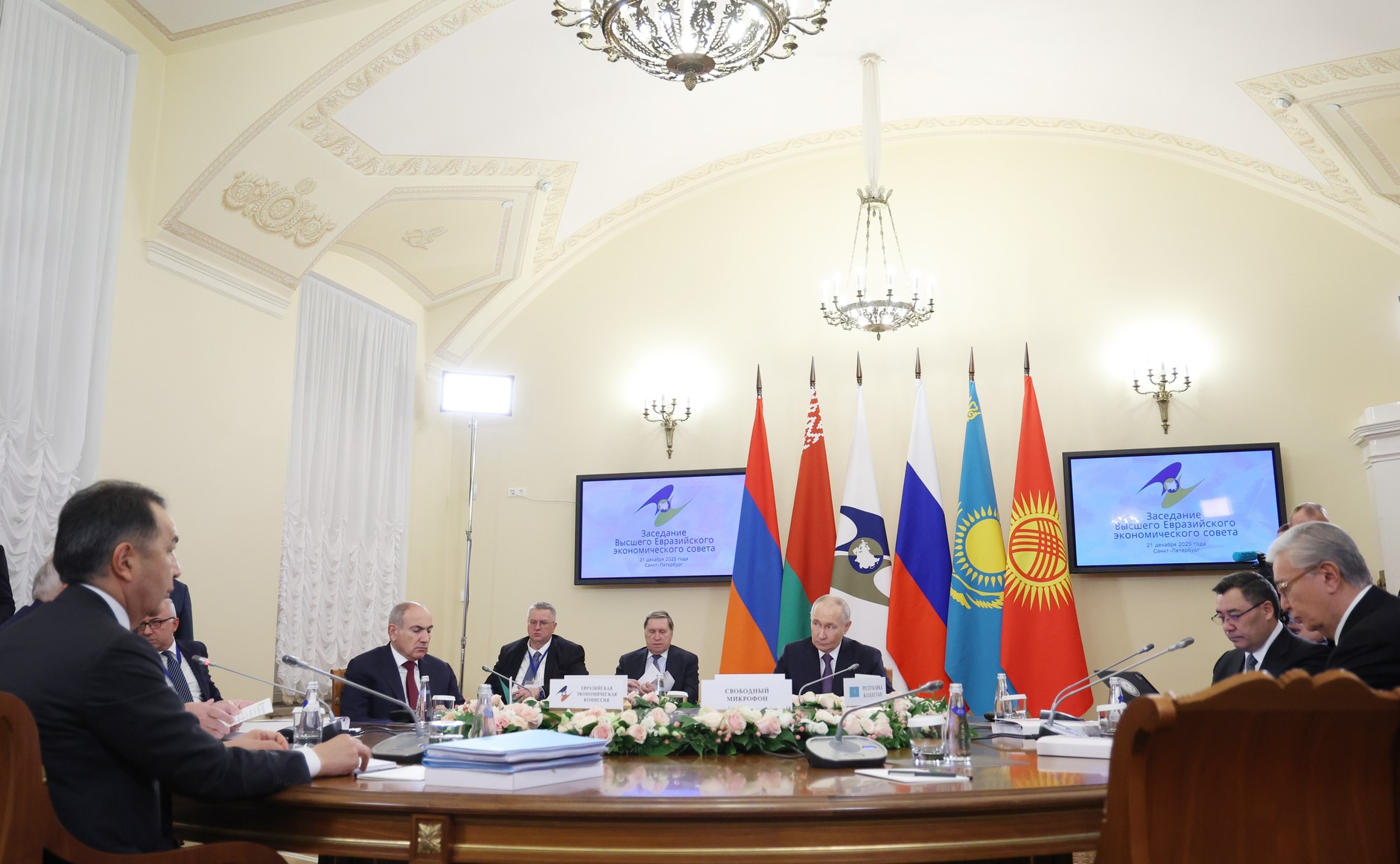
The Supreme Eurasian Economic Council is the highest governing body of the EAEU, a collegium of presidents. As practice shows, the President of Kyrgyzstan, speaking alone, often encounters the position of colleagues who, at best, support the very fact of the statement.
The principle of public diplomacy in this context can be built on information synergy, with senior officials from authorized state bodies conveying the necessary narratives through experts on Eurasian integration in the lead-up to summits.
To effectively protect national interests, institutions promoting Kyrgyzstan's position require "expert support." This requires the creation of a permanent structure under the head of state, comprised of real-world analysts and practitioners specializing in Eurasian markets. In this case, the President, relying on pre-formed public opinion and expert investigations, uses facts about real damage to businesses as the most important definition in the EAEU.
At Supreme Eurasian Economic Council meetings, the argument "our businesses and society demand an answer" carries far more weight than "we are asking for the issue to be addressed" or "we all need to work together." Including the public voice allows the debate to shift from "Bishkek versus Astana" to "Integration versus barriers."
The problem of trucks at the border is not a technical glitch, but a systemic flaw in the EAEU's public oversight mechanisms. Kyrgyzstan will be able to effectively defend its interests at the Supreme Council level only when the President has the support of not only his administration but also a powerful expert community capable of shaping international public opinion. Public diplomacy isn't about "complaining"; it's the art of making business problems visible to all of Eurasia.
Text adapted by AI. Should it lack clarity, read the original RU-ver.
Pavel Vlasov
Business Eurasia