
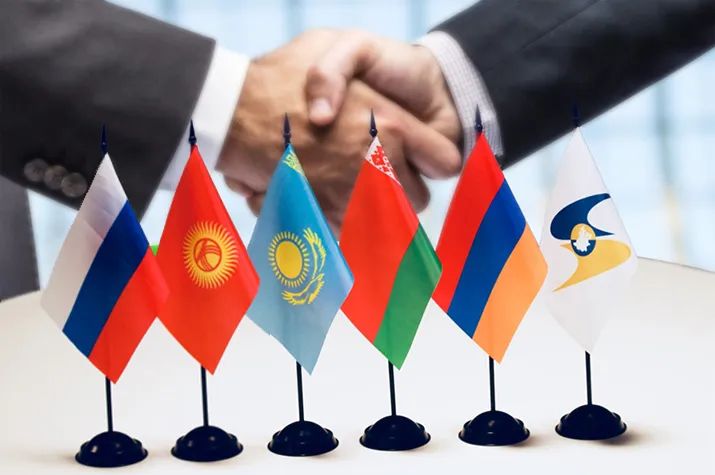
Development of freedom of services and labor makes the Eurasian project more social
The Kyrgyz Republic's appeal to the Court of the Eurasian Economic Union regarding the interpretation of clauses of the Treaty "On the EAEU" could mark a new stage in the legal understanding of member states' obligations in the areas of social security and healthcare. The dispute concerns the underlying principles of the functioning of the single labor market and the interpretation of national treatment regarding access to social benefits.
"We must understand that the development of Eurasian integration at the present stage is characterized by a transition from purely economic mechanisms of interaction to the formation of a unified social space," a source close to the governing bodies of the Eurasian bloc noted in a commentary to Delovaya Eurasia. "At the center of this process is the issue of ensuring the rights of migrant workers and their families, which is critically important for labor-exporting countries such as the Kyrgyz Republic."
The interlocutor explained that the validity of the Kyrgyz Republic's appeal to the EAEU Court regarding the interpretation of provisions on compulsory medical insurance for family members of workers requires a comprehensive legal and socio-economic analysis.
The case for clarification of the Treaty's provisions was initiated by the Kyrgyz side in November 2025. The Judicial Representation Center under the Ministry of Justice of the Kyrgyz Republic filed a petition requesting an official interpretation of the provisions regarding compulsory medical insurance for family members of migrant workers. On November 5, 2025, the Grand Chamber of the Court suspended the hearing because the petition did not comply with the requirements of paragraph 2 of Article 10 of the Court's Rules of Procedure—it lacked the signature of the duly authorized person.
The Kyrgyz side promptly corrected the identified deficiencies. On November 24, 2025, the Embassy of the Kyrgyz Republic in the Republic of Belarus submitted the original petition with the correct signature to the Court. This enabled the Grand Chamber of the Court, composed of ten judges, including Judge-Rapporteur A.A. Zabara, to issue a ruling on November 26, 2025, accepting the application for proceedings. A court hearing was scheduled for January 20, 2026.
The subject of the case was the extent to which national legislative restrictions in states of employment, particularly the Russian Federation, comply with the obligations to provide equal social security conditions to family members of migrants, as set out in Article 98 of the EAEU Treaty.
A legal analysis of the provisions of the EAEU Treaty and the acts of the Union's bodies shows that the Kyrgyz side has grounds to expect a successful resolution of the situation. According to paragraph 3 of Article 98, social security and medical assistance to workers and their family members (social security (social insurance), with the exception of pensions) are provided under the same conditions and in the same manner as for citizens of the state of employment. This provision is the core of the Kyrgyz side's argument: if Russian citizens have unconditional access to the compulsory medical insurance system, then family members of migrant workers from EAEU countries should have similar rights.
However, a legal conflict arises when comparing paragraph 3 with paragraph 4 of Article 98, which divides medical care into emergency (urgent and urgent) and "other" care. Emergency care is provided free of charge to all citizens of EAEU countries, regardless of insurance coverage, as confirmed by the provisions of Appendix No. 30 to the Treaty and clarifications from the Eurasian Economic Commission. The issue of "other" medical care, which includes scheduled treatment and medical examinations, is referred to paragraph 4 by the legislation of the state of employment and international treaties. It is this duality of provisions that gives rise to differing interpretations: whether access to the compulsory medical insurance system is an element of "social insurance" (paragraph 3) or part of "other medical care" (paragraph 4).
An analysis by Business Eurasia demonstrates the need for a detailed approach to social security and insurance services in the Eurasian Economic Union. Services and social security are among the two freedoms related to the intangible dimension that underpin the EAEU's functioning, along with the freedoms of movement of goods and capital. This, in turn, reflects the high sensitivity of this area for countries heavily dependent on labor exports.
To understand the context of Kyrgyzstan's claims, it is necessary to examine in detail how interactions between ministries and funds are organized in the Union countries. The gap in approaches to healthcare financing and work experience requirements creates an uneven environment for the realization of migrants' rights.
The pension and healthcare systems in the countries of the leading Eurasian Economic Union (EAEU) have varying degrees of maturity and financial sustainability. Russia and Belarus have the highest pension payment rates ($227 and $237, respectively), making their systems the most attractive to migrants and placing additional strain on their budgets. Kyrgyzstan has the lowest social guarantees ($80 for the minimum pension), forcing citizens to seek work abroad and demand that their families be included in the insurance systems of their countries of employment.
Pension issues have been on the EAEU agenda since the first days of its operation in 2016. On December 20, 2019, the Agreement "On Pension Provision for Workers of the Eurasian Economic Union Member States" was adopted. Five years later, the EEC Statistics Department published the first dedicated study on the topic.
On September 18, 2025, the 8th meeting of the EEC's relevant Committee was held. The meeting was expanded, with the participation of not only representatives of the EAEU member states but also representatives of leading international organizations, including the WHO, IOM, the International Association of Pension and Social Funds, and the General Trade Union Confederation. The frequency of meetings within the EAEU on social guarantees demonstrates the relevance, urgency, and sensitivity of this issue for countries with low levels of domestic employment. At the same time, it poses a challenge to the integration process itself.
The main source of conflict is the differences in national methods for financing medical care in EAEU countries.
The analysis reveals three key approaches.
Belarus – a model of state paternalism. Medical care for foreigners, including family members of migrants, is often provided on the basis of international treaties and conventions, such as the 2008 Convention on the Legal Status of Migrant Workers in the CIS. Citizens' participation in financing is minimal if they fall into preferential categories or are officially employed. However, routine care for non-residents without a residence permit remains predominantly fee-based.
Kazakhstan – an insurance model with individual liability. Clear differentiation has been developed. Non-working family members of migrants from EAEU countries temporarily residing in the country are required to pay compulsory medical insurance contributions themselves, amounting to 5% of the minimum wage. This relieves the burden on employers and the state, shifting it to the head of the family. This approach minimizes the risk of "social dependency," but can be financially burdensome for large migrant families.
Russia has a transforming budget-insurance model. Until recently, workers from the Eurasian Economic Union (EAEU) were granted access to compulsory medical insurance almost immediately. Federal Law No. 430-FZ of November 28, 2025, significantly changed the rules: now, to obtain a compulsory medical insurance policy, a foreigner must legally work in the Russian Federation for five years. Previously, this period was three years. This change in compulsory medical insurance legislation (Law No. 326-FZ) triggered Kyrgyzstan's appeal to the Court, as Bishkek sees this as a violation of the principle of equal rights enshrined in the Treaty.
The issue of healthcare has repeatedly been discussed at the highest levels. Decisions of the Supreme Eurasian Economic Council (SEEC) emphasize the need to remove barriers in the single labor market. However, specific mechanisms for financing "other" healthcare are often left to the discretion of national governments.
During meetings of the Intergovernmental Commission on Trade and Economic Cooperation, Kyrgyzstan consistently raises the issue of expanding the social package for its citizens. Bishkek points out that Kyrgyz migrants contribute to the Russian economy comparable to local workers, and their families should not be deprived of healthcare rights. Moscow, meanwhile, emphasizes the need to balance the Mandatory Medical Insurance Fund (MHIF) budget, especially in the context of the integration of new regions, where healthcare can be financed directly from the budget. Experts also note the possibility of purchasing a Voluntary Medical Insurance (VMI) policy.
Officials of the Eurasian Economic Commission recognize that the right to social security is fundamental to labor mobility. Representatives of the labor migration bloc note that access to healthcare for migrant families is not only a humanitarian issue but also a prerequisite for social stability in host countries.
Representatives of the EAEU Court, in particular the judges who participated in the acceptance of case R-7/25, emphasize the importance of a precise interpretation of Article 98. Rapporteur Judge A.A. Zabara and Presiding Judge A.A. Dronov face the difficult task of determining whether compulsory medical insurance is a form of social insurance (where national treatment is mandatory) or a form of medical services (where national legislation takes precedence).
An analytical report by Business Eurasia on the results of a study into the validity of the Kyrgyz Republic's appeal to the EAEU Economic Court.
Introduction to the problem: The study of the validity of Kyrgyzstan's appeal to the EAEU Court reveals a profound contradiction between the supranational goals of integration and the national interests of states in protecting their budgetary systems. The dispute in case R-7/25 concerns not simply technical regulations, but the fundamental human right to health protection in the context of cross-border labor movement.
Key findings of the study.
Legal validity of the appeal. The Kyrgyz Republic is entitled to seek clarification, as Article 98 of the EAEU Treaty contains ambiguous wording. Clause 3 (equality in social insurance) and Clause 4 (precedence of national law in "other" medical care) create room for legal maneuvering, which Russia used to tighten compulsory medical insurance rules through Federal Law No. 430-FZ. Economic Determinism of the Dispute: Russia's introduction of a five-year statute of limitations for compulsory medical insurance for foreigners is motivated by a desire to limit access to expensive medical services for individuals whose insurance contributions to the system are insufficient. This decision directly conflicts with the interests of Kyrgyzstan, whose economy is critically dependent on the conditions of migrants' stay in Russia.
Diversity of Models as a Barrier. A comparison of the systems of Kazakhstan and Belarus reveals the lack of a unified standard within the EAEU. The Kazakh model of independent contributions to compulsory medical insurance (5% of the minimum wage) appears to be a possible compromise; however, it does not address concerns about the lack of "national treatment" for migrant families in Russia.
Social Risks. Restricting access to routine healthcare (screening, vaccinations, treatment of chronic diseases) for migrant family members creates the risk of worsening the epidemiological situation and increases the burden on the emergency care system, which remains free and funded from the budget. The Role of Judicial Precedent: The EAEU Court's decision in Case R-7/25 will be decisive for all Union countries. If the Court recognizes access to compulsory medical insurance as a mandatory element of national treatment under paragraph 3 of Article 98, Russia will be forced to revise Federal Law No. 430-FZ. If the interpretation under paragraph 4 prevails, this could lead to the emergence of new barriers in other member states.
Forecast and Recommendations. It is expected that the EAEU Court may take an intermediate position, affirming the right of states to regulate planned assistance but declaring the inadmissibility of excessive age limits (such as 5 years), which effectively deprive migrants of the right to social insurance guaranteed by the Treaty. To minimize conflict, it is recommended to develop a unified Compulsory Medical Insurance Agreement within the EAEU, which would establish a clear list of services for family members and mechanisms for interstate settlements, so that the burden does not fall solely on the country of employment.
The study confirms that Kyrgyzstan's appeal to the EAEU Court is a logical outcome of the ongoing process of improving legal regulation of the social sphere within the Union. The outcome of case R-7/25 will determine whether the EAEU will become a fully-fledged social union or remain an area of limited economic interaction with significant national barriers remaining.
Text adapted by AI. Should it lack clarity, read the original RU-ver.
Own.info
Business Eurasia